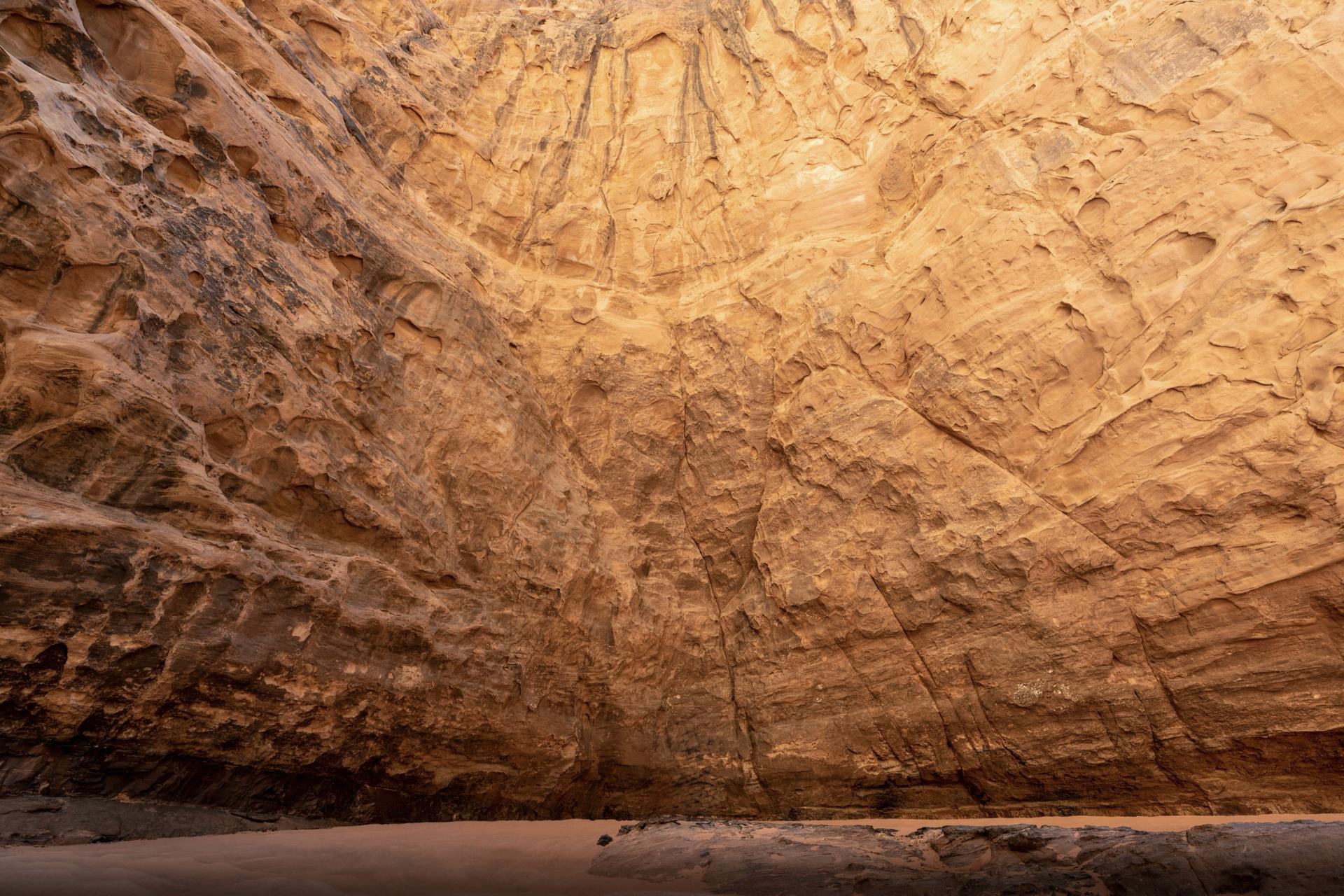
Different geologies generate hydrogen under different conditions — that is why the potential spans every continent.
Water reacts with iron-rich rock deep underground, oxidizing the iron and releasing hydrogen gas.
Radioactive elements in rocks—such as uranium, thorium, and potassium—emit alpha, beta, and gamma radiation that breaks apart underground water (H₂O) molecules.
Infiltrating water contacts rock at depth. In iron-rich rock, water oxidizes ferrous iron and forms hydrogen (e.g., serpentinization). In older basement rock, radiation from uranium, thorium, and potassium breaks water molecules apart (i.e., radiolysis). H₂ from these processes can migrate via fracture networks and accumulate beneath a caprock seal, over geologic time.
Injecting a water-based solution into iron-rich rock may accelerate the same reaction on demand — effectively turning suitable formations into hydrogen generators. The first commercial pilots are underway in Quebec, building on prior research in the laboratory.

Hover or tap an end use to explore
Low-cost H₂ can directly reduce iron ore in steel production and provide zero-emissions, high-temperature heat in industrial processes where electrification is impractical.
A philanthropic fund connecting industry, government, and academia to responsibly and rapidly scale geologic hydrogen by the 2030s.
© 2026 CHIMAERA. ALL RIGHTS RESERVED.